
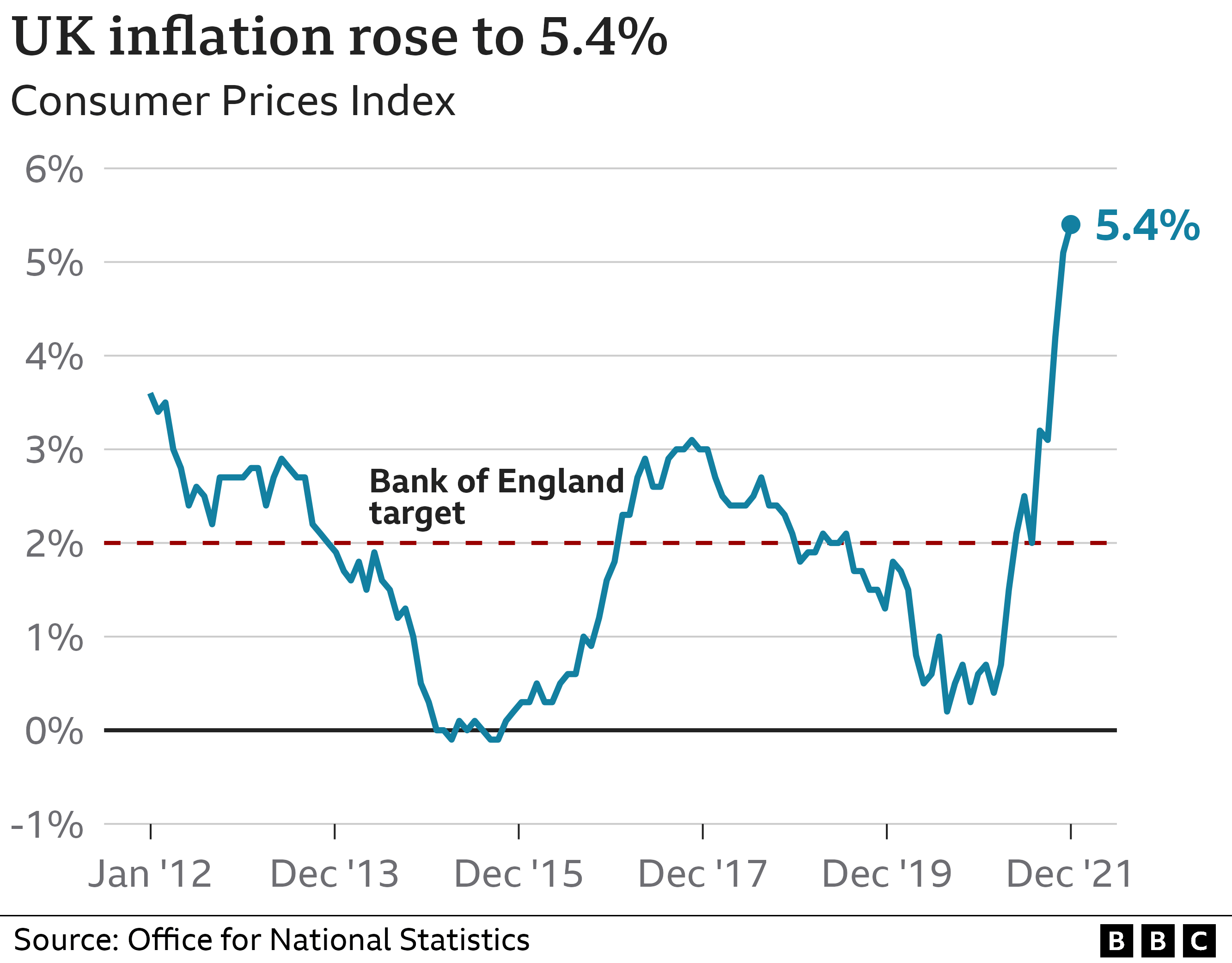
You may well have seen the above headline, or something similar, doing the rounds this week on various news websites – The UK’s rate of Inflation has risen to 5.4%. But why is this happening?
In economics, we say that there are two types of Inflation: Demand-Pull Inflation and Cost-Push Inflation. Demand Pull Inflation is normally seen during Economic Booms, when growth rates are strong, Unemployment is dropping and, generally, people and businesses have more confidence. This causes Businesses to invest more and Consumers to consume more. Investment (I) and Consumption (C) are both components of Aggregate Demand (AD), so if they’re rising so is AD. If AD increases too quickly, there will be more competition for resources, goods and services, so naturally the prices of these things will go up – causing Inflation. That’s not what’s happening here though.
As you can see in the data below, there has been a sharp rise in UK Inflation in the last 6 months or so – from nearly 0% to our rate now of 5.4%. And this is largely due to Cost-Push Inflation.
So what is Cost Push Inflation? At its most simple level, Cost-Push Inflation is caused by increasing costs of production for businesses, that are then passed on to consumers so that businesses can maintain their profit margins. In recent months, the price of many things has been rising:
- Since the start of 2020, the price of a sailing a shipping container from Asia to Europe has gone up from ≈$1,300 to ≈$12,500 – that’s a 10x increase in little over 2 years
- As has been well documented, gas prices in the UK have risen from a wholesale price of 50p/therm in Summer 2021 to about 350p/therm now – that’s a 7x increase in 6 months
- As part of the ongoing Brexit process, we officially left the EU’s Single Market in January 2021 – meaning trade restrictions and customs regulations had to be re-implemented at our borders, causing increased pressure on hauliers and a drop in efficiency that, ultimately, makes it more expensive for customers. Costs for cross-channel shipping have gone from ≈€1.50/km to ≈€6/km – a 4x increase
And these are just some of the costs that have gone up in price! You’ll also have heard of HGV Driver shortages too, and there are plenty of other input prices that are rising. All of this means UK Producers are having to pass on these costs to consumers – causing Inflation to rise. But how could we show this diagrammatically?
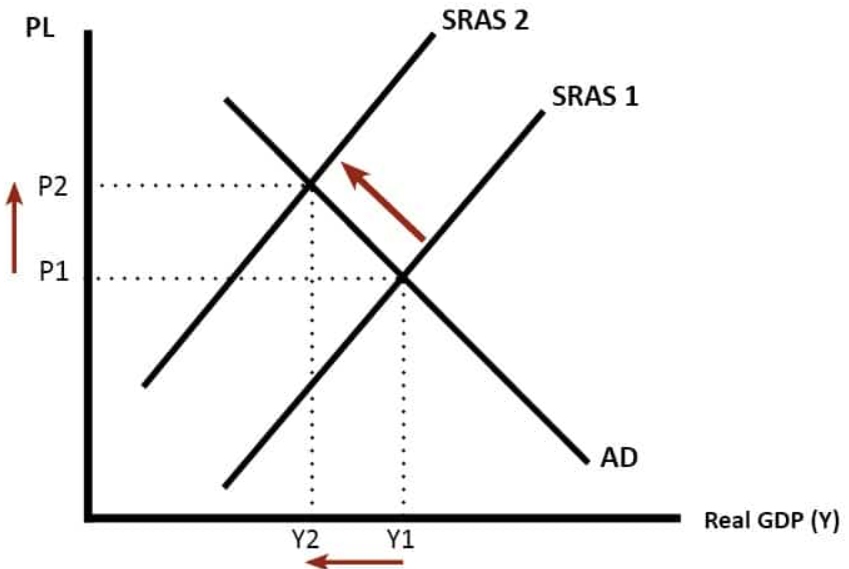

As the diagrams above show (Classical Right, Keynesian Left), an increase in costs causes SRAS/AS to shift inwards – causing the Price Level of the economy to rise and, worryingly, the Real Output (GDP) of the economy to slow, or even shrink. Why is this a problem? Stagflation – where Price Levels rise, without an increase in Output.

 TJA Economics